
Addressing Patient’s Bone Loss with Extensive Bone Grafting for Dental Implants
The Challenge
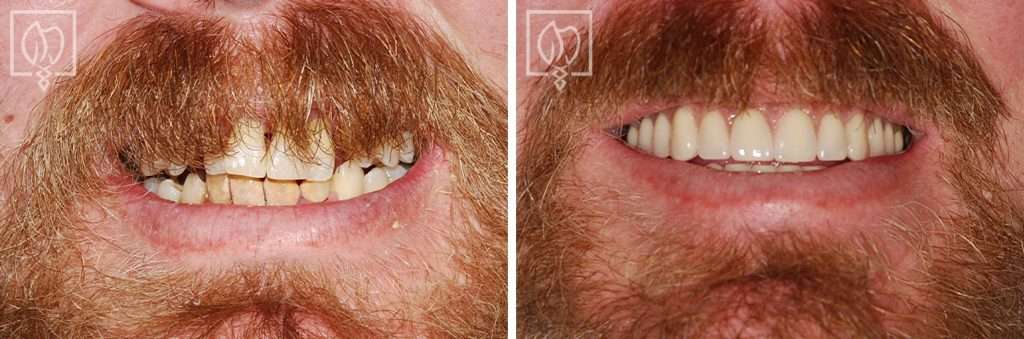
After experiencing severe teeth discoloration, gaps between his teeth, and gum recession, Craig, a patient from Washington, DC, came to Elite Prosthetic Dentistry for help. He wanted to restore his smile and address the multiple concerns that were affecting both his appearance and his confidence.
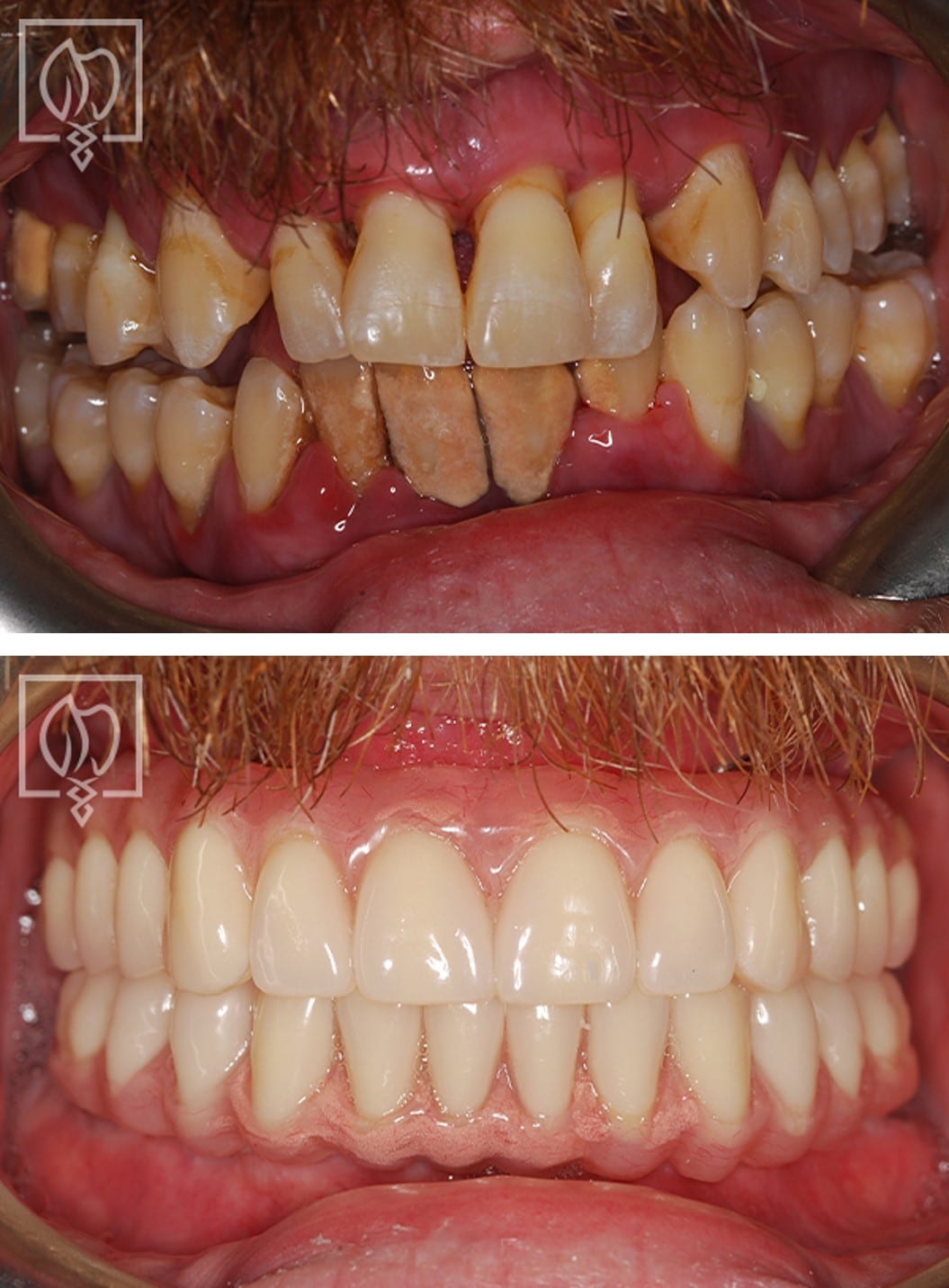
However, a thorough evaluation revealed a significant challenge: While Craig did not experience significant decay or breakdown of his teeth, he did have extensive bone loss. Bone loss can occur from many causes, including periodontal disease, tooth loss, aging, or previous dental trauma. The extent of Craig’s bone loss was critical because it directly affected his candidacy for dental implants.
The Problem with Rushing Treatment
Any dental implants placed using an accelerated protocol that skipped the bone grafting phase would have ultimately failed because the bone had not been restored to adequate volume and density. Without sufficient bone support, implants cannot achieve the stability and integration necessary for long-term success. Rushing to place implants without first restoring the foundation would have doomed the treatment to failure.
Our Comprehensive Approach
For a successful treatment, meaning a smile that looks natural, functions properly, and lasts a lifetime, Craig required extensive bone grafting. This was not a shortcut we could skip. Our team carefully planned and executed comprehensive bone grafts to restore the bone volume needed to support dental implants.
We then waited six months for the bone grafts to be fully integrated with Craig’s natural bone. This waiting period was essential to ensure a strong, stable foundation for implant placement. During this time, Craig wore temporary restorations so he never had to compromise his appearance while healing.
The Implant Placement and Restoration
Once the bone had sufficiently integrated, we placed six dental implants using precise surgical planning and advanced techniques. The six implants provided exceptional support for his final restorations, sometimes referred to as an “All-on-4” type therapy, which uses the strategic placement of implants to support a full arch of teeth.
Once the implants were inserted and had healed sufficiently (typically 3 to 6 months), we proceeded with Craig’s smile restoration by designing custom crowns and restorations using our in-house laboratory. Each restoration was hand-crafted to match his facial features and create a natural, beautiful result.
Why This Case Matters
This treatment case demonstrates a fundamental principle of excellent prosthodontic dentistry: not allowing the speed of treatment to be prioritized over appropriately preparing the surgical site for the utmost success. Dr. Marlin could have suggested faster treatment options that would have looked good initially but failed within a few years. Instead, he recommended the comprehensive approach that would provide lasting success.
The Benefits of Proper Planning
Patients who receive adequate bone grafting and who allow proper healing time experience:
- Superior implant stability and long-term success
- More natural-looking and functional results
- Better preservation of bone over time
- Lasting results that continue to function well for decades

watch: Dr. Marlin Discusses a Dental Implant Patient Case Involving Bone Preservation
Craig’s successful treatment demonstrates that patience and proper planning result in beautiful, functional smiles that last for decades with proper care. If you have bone loss and are concerned about implant candidacy, contact Elite Prosthetic Dentistry to discuss your comprehensive treatment options.
Full-arch reconstruction has multiple protocol options. All-on-6 prioritizes biomechanical redundancy with six implants per arch; All-on-4 achieves a stable result with four when posterior bone is limited or treatment efficiency matters most.
Related Services
Related Patient Success Stories
Explore similar patient success stories demonstrating our expertise in advanced prosthetic dentistry.
 Before
  After
After How Severe Bone Loss and Bite Dysfunction Were Rebuilt with All-on-6 Implants and a Milled Zirconia Hybrid Prosthesis
The patient presented with severe bone loss, advanced periodontal disease, malocclusion, and a dysfunctional bite that required full-arch rebuilding.
 Before
  After
After Implant Supported Reconstruction: Failing Bridgework and Missing Back Teeth Rebuilt with Coordinated Specialist Care
Referred by another dental specialist with severe bone resorption on the upper left, multiple broken-down lower teeth requiring extraction, and failing lower back teeth that had left the bite without solid support. No single procedure, and no single provider working alone, could rebuild a situation this interconnected.
 Before
  After
After Repairing the Worn Out Dentition: How Severely Worn Teeth Were Rebuilt for Long-Term Function
Decades of gradual wear had shortened, flattened, and darkened the visible teeth. The dentition still functioned day to day, which made it easy to postpone, but every year of additional wear was removing tooth structure that could never grow back.