
Can Dental Crowns Closely Match My Existing Teeth Color and Shape?
A color-matched crown for a visible front tooth
Color-matched dental crown treatment in Washington, DC. This documented case at Elite Prosthetic Dentistry answers a question patients ask often: can a dental crown closely match the color and shape of the natural teeth around it? The crown in this case restored a single front tooth, one of the most demanding esthetic assignments in restorative dentistry, and was hand-fabricated in the practice’s in-house laboratory. Treatment was planned and completed by Dr. Gerald Marlin, D.M.D., M.S.D., a prosthodontist focused on esthetic and complex restorative care.
Case at a Glance
- Treatment
- Custom crown for a single front tooth, color-matched to the surrounding natural teeth
- Approach
- Hand fabrication in the in-house laboratory with internal shading and layered translucent porcelain
Documented case views
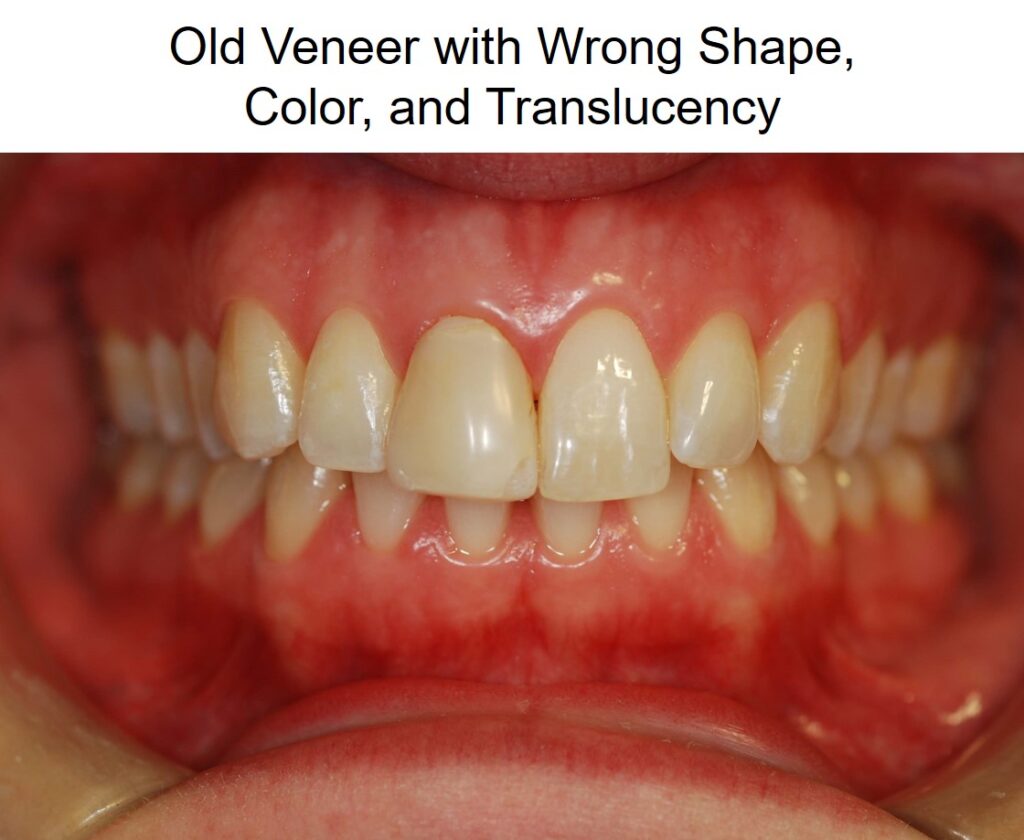 Before
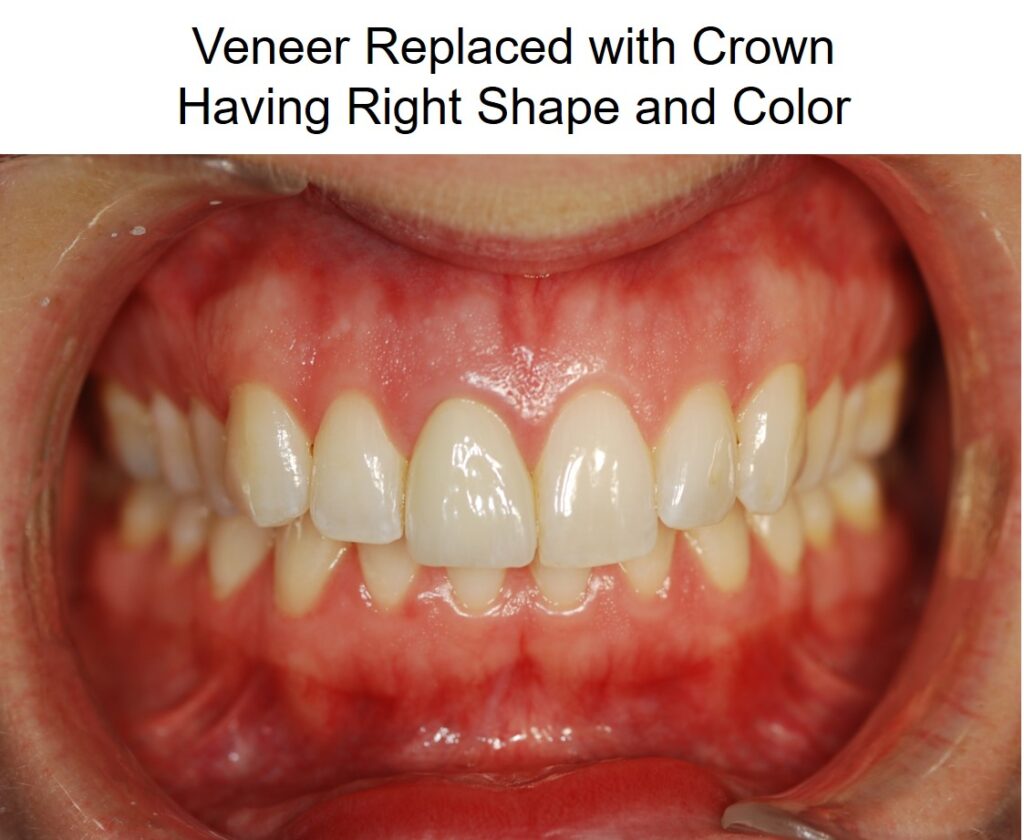 After
After
The presenting condition
The patient in this case needed a crown on a single front tooth, in the zone of the smile where any restoration takes front and center stage. Crowns in that position are visible in every conversation and every photograph, so the question that matters most is not whether the crown will be strong. Modern crowns restore function predictably. The question is whether the crown will read as a natural tooth.
That is an optical problem more than a mechanical one. A front-tooth crown sits directly beside natural enamel, and natural teeth are not a single, uniform color. They carry gradients from the gumline to the biting edge, translucency where the enamel thins, and small variations in character that the eye registers instantly, even when the viewer cannot say why something looks off.
Clinical Findings
- →A single front tooth requiring a crown in the most visible zone of the smile
- →The restoration had to match the color, shape, and translucency of the neighboring natural teeth
- →A flat, monochromatic, or opaque result would have been noticeable every time the patient smiled
- →Fit at the contacts and along the gum tissue had to support a natural bite
Why this case required prosthodontic-level planning
Matching one tooth is harder than matching many. When several teeth are restored together, the restorations only need to harmonize with each other. A single crown has to disappear against the patient’s own enamel, which means the shade, the translucency, the surface texture, and the silhouette all have to be judged against a living reference standing in the room.
Fabrication method decides how close that match can get. Crowns produced remotely from a written shade code or a stock digital library can come close on the base color, but they cannot account for the nuances of an individual smile the way an in-person team can. The practice’s approach is different by design: experienced technicians in the in-house laboratory work directly with Dr. Marlin and with the patient, evaluating the natural teeth themselves rather than a code on a form.
Material selection is part of the same judgment. For front teeth and visible esthetic restorations, the practice favors modern high-translucency multilayered zirconia, while e.max lithium disilicate is often the choice for back teeth, bruxism cases, and other high-stress positions. Matching the material to the position and the bite is a prosthodontic decision, made before any fabrication begins.
Fit carries equal weight. A beautiful crown with poor contacts or a high bite is not a success. Patients sometimes come to the practice with a crown whose bite is causing jaw pain or discomfort, and the practice’s experience with TMJ treatment allows occlusal issues of that kind to be evaluated comprehensively rather than adjusted blindly.
The decision behind the result: internal shading instead of surface staining
The key judgment in this case was how the crown’s color would be built. The faster route is surface staining, where color is painted onto the outside of a finished crown. It can approximate a shade, but it tends to produce a flat, single-note appearance, and it is the reason some crowns look opaque or artificial next to natural teeth.
The crown in this case was custom shaded internally instead. Color was built into the crown itself and then overlaid with translucent enamel porcelains, a layering process that gives the restoration three-dimensional depth, so light moves through it the way it moves through natural enamel. A final custom staining pass personalized the surface character to the patient’s own teeth. That sequence, internal shading first and personalization last, is what allows a crown to hold up to close range rather than only reading well from across the room.
The treatment plan
-
1
Precise measurement and impressions
High-quality impressions and careful measurement of the surrounding teeth established the size, shape, and shade targets for the new crown.
-
2
Hand fabrication in the in-house laboratory
The crown was custom shaded internally, overlaid with translucent enamel porcelains for three-dimensional depth, and custom stained to personalize it to the patient's smile.
-
3
Fit refinement at delivery
Contacts were adjusted and the crown shaped to sit seamlessly against the gum tissue, so the restoration supports a natural bite as well as a natural appearance.
-
4
Verification before final adjustment
X-rays taken after crown placement confirmed the fit before any bite adjustment was performed, a verification step that protects the long-term result.
The outcome
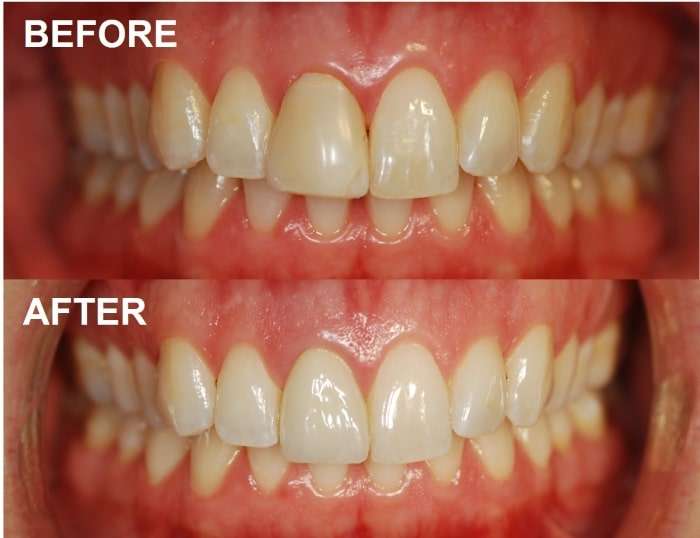
The completed crown blends with the surrounding natural teeth in color, translucency, and shape. Because the shading was built into the restoration rather than painted onto it, the crown carries the depth and light behavior of a natural tooth instead of the flat look that gives dental work away. The final restoration was produced through direct coordination between Dr. Marlin and the practice’s in-house laboratory, which kept control over fit, contour, shade, and function in one building from start to finish.
That control has a practical benefit beyond esthetics. Verifying the fit carefully at delivery, including X-rays before any bite adjustment, reduces the need for patients to return for repeated crown adjustments after the fact.
Result Highlights
- ✓Crown color, translucency, and shape matched closely to the neighboring natural teeth
- ✓Three-dimensional depth from internal shading and layered translucent porcelain
- ✓Contacts and gum-line contours refined for a seamless, natural fit
- ✓Fit confirmed with X-rays before final bite adjustment
- ✓Esthetics and fit controlled start to finish in the in-house laboratory
Final documented view
Who this case may sound familiar to
This case tends to resonate with patients in a few recognizable situations:
- You need a crown on a front tooth and are worried it will stand out as obvious dental work.
- You already have a crown that never quite matched, and you notice it in every photograph.
- You want the shade decisions made in person, against your own teeth, rather than from a code sent to a distant laboratory.
- You have a crown whose bite feels off or is causing jaw discomfort, and you want it evaluated properly rather than repeatedly adjusted.
- You would rather have a restoration made carefully once than remade twice.
If any of those describe where you are, a consultation with Dr. Marlin can establish the diagnostic picture and the specific options for your case.
Frequently asked questions
Can a dental crown really match the color of natural teeth?
Yes, when it is built for the match. Natural teeth are not a single color. They carry gradients from the gumline to the edge along with varying translucency. A crown that is custom shaded internally, layered with translucent porcelains, and evaluated against the neighboring teeth in person can blend closely enough that most people cannot pick it out.
What is the difference between internal shading and surface staining?
Surface staining applies color to the outside of a finished crown. Internal shading builds color into the crown itself and then overlays translucent enamel porcelains so light passes through the restoration the way it passes through natural enamel. Internal shading produces three-dimensional depth, while surface stain alone can leave a crown looking flat or opaque.
Why does an in-house laboratory matter for crown color matching?
Because the color decisions are made in person rather than from a written shade code. The technicians can evaluate the neighboring teeth directly, adjust shading during fabrication, and refine the crown with the dentist in the same building. That level of coordination is difficult to achieve when laboratory work is sent out.
Which materials are used for natural-looking crowns?
Material selection depends on position and bite forces. High-translucency multilayered zirconia is often chosen for front teeth and visible esthetic restorations, while lithium disilicate, known as e.max, is frequently used for back teeth, bruxism cases, and other high-stress positions. A prosthodontic evaluation matches the material to the tooth and the bite.
How is the fit of a new crown verified?
Fit is checked at the contacts with neighboring teeth, along the gum tissue, and in the bite. In this practice, X-rays are also taken after crown placement to confirm the fit before any bite adjustment is made. Careful verification at delivery reduces the need for repeat adjustment visits.
Can a crown that never matched be replaced?
Yes. A crown that looks flat, opaque, or mismatched can be re-evaluated and remade. The evaluation looks at the underlying tooth, the bite, and the esthetic goals so the replacement corrects both the appearance and any fit issues rather than repeating them.
More about the work behind this case
This case reflects the standard applied to every custom dental crown at the practice, whether the goal is a single tooth or a broader cosmetic dentistry plan. The insistence on in-house fabrication, in-person shade evaluation, and verified fit is part of the practice philosophy behind restorations meant to last for decades of smiling.
Elite Prosthetic Dentistry treats patients from across the DMV including Bethesda, Chevy Chase, McLean, Arlington, Potomac, and Great Falls, with a record of out-of-area patients traveling to the practice for complex restorative care.
Related Services
Related Patient Success Stories
Explore similar patient success stories demonstrating our expertise in advanced prosthetic dentistry.
 Before
  After
After How Aging, Opaque Restorations Were Replaced with Customized Ceramic Restorations Designed for Long-Term Natural Esthetics
The existing restorations appeared opaque, worn, and unnatural over time, affecting both confidence and overall smile harmony.
 Before
  After
After Two Front Teeth Saved From Extraction: A Second Opinion, Custom Gold Posts, and Crowns Made to Last
Two upper central incisors with failed root canal treatment and recurrent decay had been recommended for extraction and implant replacement. A CBCT evaluation showed that removing the roots from their thin facial bone housing could create a visible esthetic defect in the gum and bone contour, made worse by the patient's high lip line.

Temporary Crowns Restore a Patient's Smile in One Day with an Immediate Smile Makeover
A patient from Potomac, Maryland came to the practice in pain from a failing dental implant whose restoration was also compromising her appearance and her confidence.