
Patient Was Dissatisfied With Her 'Gummy' Smile
Documented before-and-after view
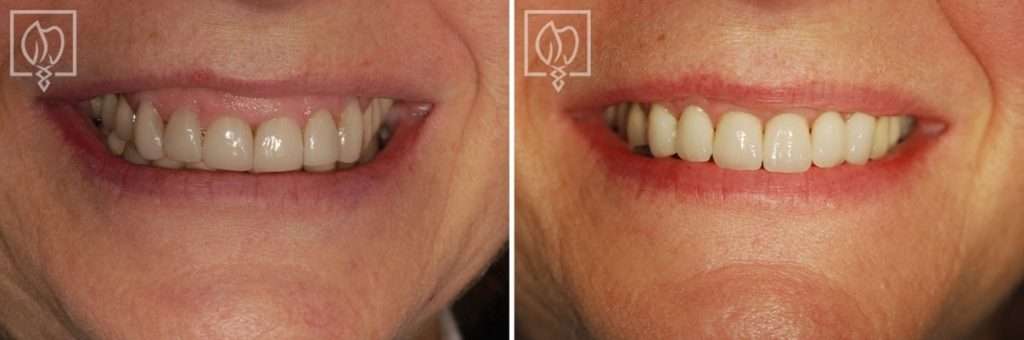
Gummy smile treatment combining gum contouring and crown restoration
Gummy smile treatment in Washington, DC. This documented case at Elite Prosthetic Dentistry involved a patient who was dissatisfied with the amount of gum tissue showing when she smiled, a condition known as excessive gingival display. Rather than addressing the gum line in isolation, treatment paired gummy smile correction with lengthened crown restorations so the whole proportion of the smile changed. Treatment was planned and completed by Dr. Gerald Marlin, D.M.D., M.S.D., a prosthodontist focused on esthetic and restorative care.
Case at a Glance
- Treatment
- Gingival contouring combined with lengthened crown restorations
- Approach
- One coordinated plan treating gum display and tooth display together
The presenting condition
Excessive gingival tissue, commonly called a gummy smile, changes how a smile reads. When a large amount of gum tissue is visible above the teeth, it can create the perception that the teeth are too small or too short, even when they are actually normal size. The effect is rarely just cosmetic on paper. Many patients with excess gum display modify their expressions to hide it, hold back in photographs, or feel self-conscious in social situations.
That was the picture here. The patient came to Elite Prosthetic Dentistry concerned about her gummy smile and the amount of gum tissue showing whenever she smiled. The condition was affecting her appearance, her confidence, and her willingness to smile fully. She understood that she could not change her genetics or her basic facial structure, but she wanted to know whether the proportion of gum to tooth could be improved, and she was dissatisfied enough with how she looked to pursue it.
Clinical Findings
- →Excessive gum tissue visible above the teeth when smiling
- →A gum-to-tooth proportion that made the teeth read as shorter than their true size
- →Reduced confidence and reluctance to smile fully
- →The patient wanted a softer, fuller, more feminine smile
Why this case required prosthodontic-level planning
A gummy smile is a proportion problem, and a proportion has two sides. The amount of visible gum is one variable. The amount of visible tooth is the other. Treatment that adjusts only one of them often produces an improvement that still does not look right, because the underlying ratio has only been half corrected.
That is why cases like this benefit from being planned as smile design rather than as a single procedure. The gum line, the tooth display, and the way both sit against the patient’s lip line need to be evaluated together, with the final proportions established before any tissue is reshaped. A prosthodontist approaches the smile as one composition, which is what protects patients from a technically successful procedure that falls short of the appearance they wanted.
The decision behind the result: treating the gum line and the teeth as one design
The key judgment in this case was that neither gum reshaping nor crown work alone would deliver the smile the patient was asking for. To create the softer, fuller, more feminine smile she wanted, Dr. Marlin took a comprehensive approach that changed both sides of the ratio.
The gum tissue was addressed first, through a careful surgical procedure called gingival contouring, which removes excess tissue and reshapes the tissue line so less gum shows when smiling. But the plan did not stop there. The crowns were also lengthened to show more of her teeth, increasing the visible tooth structure at the same time the gum display was being reduced. Working both variables together is what produced the more dramatic and satisfying improvement, proportions that made her smile appear longer, fuller, and more youthful rather than merely less gummy.
The treatment plan
-
1
Evaluation of the smile as a whole
The gum display, the tooth display, and the patient's goals were assessed together so the target proportions were established before treatment began.
-
2
Gingival contouring
A careful surgical procedure removed excess gum tissue and reshaped the tissue line, decreasing the amount of gum shown when smiling and creating a natural-looking gum line that frames the teeth.
-
3
Lengthened crown restorations
Crown restorations were lengthened to show more of the patient's teeth. Crown work at the practice is fabricated in its own laboratory, where Dr. Marlin works directly with the technicians on contour and shade.
-
4
Final proportion check
With gum display reduced and tooth display increased, the completed smile was evaluated against the plan: longer, fuller, and balanced with the patient's lip line.
The outcome
Upon completion of treatment, the patient’s naturally attractive lip line was enhanced and she was able to smile without worry. Her confidence was restored, and she could smile fully without the self-consciousness that excess gum display had caused. Because both the tissue and the tooth display were changed together, the result reads as a naturally proportioned smile rather than a procedure.
Result Highlights
- ✓Reduced gum display when smiling
- ✓More visible tooth structure through lengthened crown restorations
- ✓A smile that appears longer, fuller, and more youthful
- ✓A natural-looking gum line framing the teeth
- ✓Restored confidence and a willingness to smile fully
Who this case may sound familiar to
This case tends to resonate with patients in a few recognizable situations:
- You notice more gum than tooth when you see photographs of your own smile.
- Your teeth are healthy, but they look short or small when you smile.
- You hold back a full smile in social settings because of how much gum shows.
- You want the gum line and the teeth planned together, not one procedure sold in isolation.
- You want a result that looks naturally proportioned rather than obviously treated.
If any of those describe where you are, a consultation with Dr. Marlin can establish the diagnostic picture and the specific options for your case.
Frequently asked questions
What causes a gummy smile?
A gummy smile usually reflects proportion rather than disease. The gum tissue may sit low on the teeth, the teeth may be partly covered by tissue, or the lip may rise high when smiling. Genetics and basic facial structure play a large role. An evaluation identifies which factors are involved, because the cause shapes the treatment.
What is gingival contouring?
Gingival contouring is a careful surgical procedure that removes excess gum tissue and reshapes the tissue line so less gum shows when smiling. The goal is a natural-looking gum line that frames the teeth in proportion.
Does gum contouring alone correct a gummy smile?
Sometimes, but not always. If the teeth still read as short after the gum line is reshaped, the smile can remain out of proportion. In many cases the stronger result comes from treating both sides of the ratio, reducing gum display while also increasing visible tooth structure with restorations designed for the new gum line.
Is gummy smile treatment purely cosmetic?
The motivation is usually esthetic, but the planning is clinical. Tissue health, the position of the gum line, the bite, and the proportions of the individual face all constrain what can be done safely. That is why gummy smile correction benefits from specialist-level planning rather than a one-size approach.
Why see a prosthodontist for gummy smile correction?
Because the result depends on how the gum line, the teeth, and the smile line work together. A prosthodontist plans that relationship as a whole, coordinating tissue reshaping with restorations so the final proportions look natural rather than treated.
More about the work behind this case
This case combined gummy smile correction with custom crown restorations as part of the practice’s broader cosmetic dentistry work. Planning the gum line and the tooth display as one composition reflects the practice philosophy of designing the endpoint before recommending a procedure.
Elite Prosthetic Dentistry treats patients from across the DMV including Bethesda, Chevy Chase, McLean, Arlington, Potomac, and Great Falls, with a record of out-of-area patients traveling to the practice for complex restorative care.
Related Services
Related Patient Success Stories
Explore similar patient success stories demonstrating our expertise in advanced prosthetic dentistry.
 Before
  After
After How Aging, Opaque Restorations Were Replaced with Customized Ceramic Restorations Designed for Long-Term Natural Esthetics
The existing restorations appeared opaque, worn, and unnatural over time, affecting both confidence and overall smile harmony.
 Before
  After
After Two Front Teeth Saved From Extraction: A Second Opinion, Custom Gold Posts, and Crowns Made to Last
Two upper central incisors with failed root canal treatment and recurrent decay had been recommended for extraction and implant replacement. A CBCT evaluation showed that removing the roots from their thin facial bone housing could create a visible esthetic defect in the gum and bone contour, made worse by the patient's high lip line.

Temporary Crowns Restore a Patient's Smile in One Day with an Immediate Smile Makeover
A patient from Potomac, Maryland came to the practice in pain from a failing dental implant whose restoration was also compromising her appearance and her confidence.