
Dental Hygiene Care Is Not a 'One-Size-Fits-All' Process
Oral hygiene is the first line of defense against cavities and gum disease, the conditions that quietly cost people bone and teeth. But the generic advice printed on every toothpaste box was written for an average mouth, and almost nobody has one. Your teeth, gums, risk factors, and dental history are specific to you, which means effective hygiene care has to be specific to you too.
Here is why one-size-fits-all falls short, and what personalized care looks like instead.
Your Dental Work Changes the Assignment
If you have crowns, bridges, or dental implants, hygiene is not just protecting teeth; it is protecting an investment. Plaque at a crown margin can start decay at the one place the crown cannot defend, and the tissue around an implant can develop peri-implant infection if biofilm sits undisturbed. Each restoration type has its own cleaning geometry: floss threaders or water flossers under bridges, interdental brushes around implant crowns, careful gumline technique at margins. Hygiene tailored to your restorations is a large part of why they last, a topic we cover in how to care for a dental implant and how long a crown should last.
Thorough diagnostics support this. At Elite Prosthetic Dentistry we take a full-mouth series of individual X-rays rather than relying on a single panoramic film, because individual films show the fine detail at each tooth and restoration margin where problems actually begin. Depending on your oral health, this set is updated every two to three years so nothing develops unwatched.
Your Cleaning Interval Is a Prescription, Not a Tradition
The familiar twice-a-year cleaning schedule fits many patients, but it is a starting point, not a law. Gum disease history, heavy tartar formation, dry mouth from medications, diabetes, and extensive restorative work all argue for shorter intervals, often three to four months. Other patients maintain beautifully at six. In our hygiene program, the interval is set from what your examination and gum measurements actually show, then adjusted over time. That measured approach is a large part of why our patients rarely lose teeth once their condition has been treated and a maintenance plan is in place.
Home care instructions deserve the same tailoring. The right brush, the right interdental tools, technique adapted to your dexterity and your restorations, delivered as a specific plan rather than a pamphlet. At each visit we revisit how the plan is working and refine it.
Your Life Stage and Health Change the Plan
Personalization is not only about dental work; it tracks your life. A teenager, a pregnant patient, someone managing diabetes, and a retiree taking several medications each have different needs, and a routine that fit ten years ago may not fit now. Medications that reduce saliva raise decay risk and call for extra fluoride and hydration. Hormonal changes make gums more reactive and can justify shorter cleaning intervals. Reduced dexterity from arthritis may mean switching to a powered brush or different interdental tools. Dry mouth, reflux, and a high-sugar or high-acid diet each shift the plan in their own direction. This is why we revisit your routine over time rather than setting it once. The right hygiene program is a living thing that adjusts as your mouth and your health do, and small adjustments made early prevent larger problems later.
Good Hygiene Keeps Your Options Open
Personalized hygiene pays twice. First, it prevents much of the restorative work people assume is inevitable. Second, if you ever want cosmetic or restorative treatment, healthy gums and well-maintained teeth make you a far better candidate; excellent dentistry is built on healthy foundations, never on inflamed tissue. When conditions need specialty care beyond our scope, such as advanced gum disease, we refer to trusted specialists and coordinate your care.
The goal is simple to state: the healthiest possible smile for as long as possible, supporting your health, your appearance, and every restoration you have invested in.
Hygiene Care Built Around You
If your hygiene care has felt like an assembly line, consider whether your mouth deserves a plan of its own. To have your teeth, gums, and restorations evaluated and a personalized maintenance program built around what we find, call 202-244-2101 or request an appointment at Elite Prosthetic Dentistry in Friendship Heights, Washington, DC.
Sources:
See How We Resolve These Problems
Our patient success stories show real cases and real results. Browse outcomes from a specialist prosthodontist with decades of experience and 3,900+ implants placed.
Key Takeaways
- ✓ Generic hygiene advice fits the average mouth, and almost no one has the average mouth. Risk factors, gum status, and dental work all change what your routine should be.
- ✓ Patients with crowns, bridges, or implants need hygiene tailored to those restorations, because plaque at margins and around implants is what shortens their lifespan.
- ✓ Cleaning intervals are a clinical decision. Some mouths genuinely need professional care every three or four months, others do well at six.
- ✓ Detailed diagnostics matter: individual X-rays of each tooth reveal problems at margins and roots that broader imaging can miss.
Frequently Asked Questions
Why would my hygiene routine need to be different from someone else's?
Because your risk profile is different: gum status, decay history, saliva flow, medications, dexterity, diet, and especially any dental work you have. A patient with implants and crowns has different vulnerable spots than someone with untouched teeth, so the tools, technique, and professional cleaning interval should be prescribed for your mouth, not an average one.
How often should teeth be professionally cleaned?
It genuinely varies. Twice a year fits patients with healthy gums and low risk, while those with a history of gum disease, heavy tartar formation, dry mouth, or extensive restorations often need cleanings every three to four months to stay ahead of trouble. The right interval is set from your examination findings, then adjusted as your health changes.
Do crowns and implants change how I should clean my teeth?
Yes. Crown and bridge margins at the gumline are where decay and inflammation begin, so they need deliberate brushing and flossing attention. Implants cannot decay but can develop peri-implant disease, so daily cleaning around them, sometimes with interdental brushes or a water flosser, is essential. Your hygienist should demonstrate technique specific to your restorations.
Related Patient Success Stories
Explore similar patient success stories demonstrating our expertise in advanced prosthetic dentistry.
 Before
  After
After How Aging, Failing Dentistry Was Replaced with a Coordinated Full-Mouth Implant and Crown Reconstruction
The patient presented with throbbing upper-molar pain, long-standing infections, multiple root canals and unfinished prior treatment, generalized sensitivity, and several hopeless teeth.
 Before
  After
After How Failing Implants and Severe Bone Loss Were Rebuilt Into a Stable Full-Arch Implant Reconstruction
The patient presented with significant complications from previously placed implants, severe bone loss, failing posterior implants, and an unesthetic full-arch bridge. Both arches required full reconstruction, with the upper arch showing the most advanced bone loss and instability.
 Before
  After
After How Failing Lateral Incisor Implants Were Replaced with Custom Zirconia Bridges After Severe Bone Loss Made Replacement Implants Impossible
Comprehensive examination including CBCT imaging revealed significant bone loss surrounding implants that were placed outside the buccal plate, most likely due to placement without a CBCT-generated surgical guide. The implants were determined non-salvageable, and the alveolar ridge was too narrow to support replacement implants without extensive reconstruction.
Related Articles
Deepen your knowledge with additional insights on this topic.
 Oral Health & Prevention
 Common Misconceptions About Gum (Periodontal) Disease: Myths vs. Facts
Bleeding gums are normal? Only older adults get gum disease? A DC prosthodontist corrects eight common myths about periodontal disease signs and treatment.
 Oral Health & Prevention
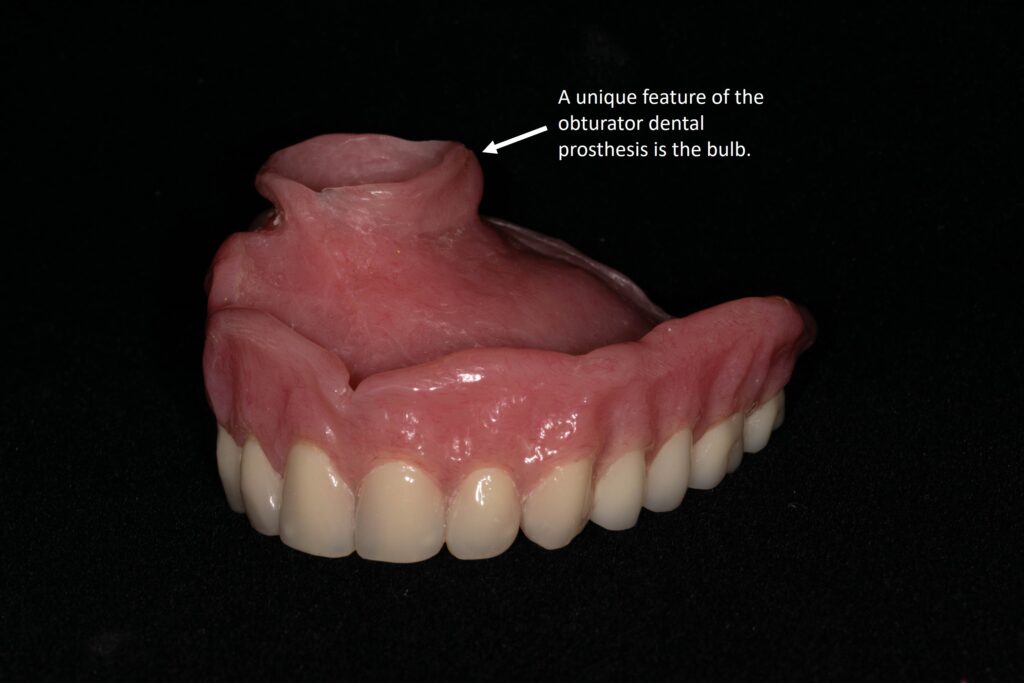
 Understanding Palatal Obturators for Openings in the Roof of the Mouth
A palatal obturator seals an opening in the roof of the mouth from cleft palate, surgery, or trauma. A DC prosthodontist explains how they work and their care.
 Oral Health & Prevention
 Dental Hygiene Care Is Not a 'One-Size-Fits-All' Process
The right hygiene routine depends on your gums, your risk factors, and your dental work. A DC prosthodontist explains why personalized hygiene care matters.