
How Are Dental Crowns Made? Watch the 3 Methods Compared
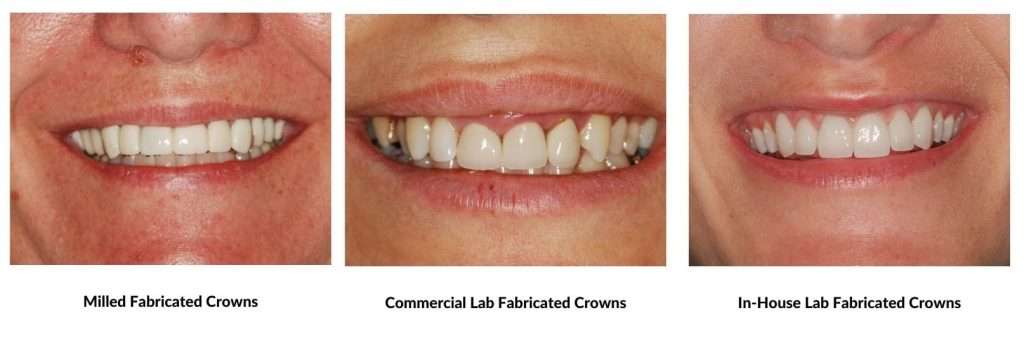
There are three different ways to manufacture a dental crown. It can be milled by a machine from a library of stock digital tooth shapes, fabricated in a commercial laboratory across town or across the country, or handcrafted to your individual anatomy by an in-house dental technician. At Elite Prosthetic Dentistry, we chose the third path decades ago, because the method behind a crown decides its fit, its beauty, and its lifespan.
Each approach trades off cost, speed, and quality differently. Understanding how they differ takes about three minutes, and it will change how you evaluate any crown recommendation you receive, whether it is your first crown or a replacement for dentistry that has quietly aged past its best years.
Watch: Dr. Marlin Explains the Three Methods
In the video below, Dr. Gerald Marlin, a specialty-trained prosthodontist in Washington, DC, walks through the limitations of milled and commercial-laboratory crowns and shows why hand fabrication produces a different result.

The short version: milled crowns follow predetermined shapes, so they approximate your tooth rather than reproduce it, and their single-block construction cannot carry the internal color variation of natural enamel. Commercial laboratories can be capable, but the technician works from an impression and a written shade number, never from your actual smile. Neither method allows the person making the crown to check their work against your mouth before it is finished.
What Changes When the Laboratory Is Down the Hall
When our technician meets you, examines your teeth in person, and discusses what you want, that direct connection is built into the restoration. Shade is matched at multiple depths of the ceramic, not painted on the surface. Contours are refined against your adjacent teeth. Fit is verified under magnification and confirmed by X-ray at seating. If any detail is not right, the crown goes back to the bench immediately, not into a shipping box.
That standard of control is why crowns from our in-house laboratory have lasted 35 years and longer with proper care. It also means practical advantages you feel during treatment: faster turnaround, fewer appointments, and same-visit adjustments when a contact point or bite needs refining.
For a deeper comparison of the three fabrication routes, including what the research and the American Dental Association say about laboratory standards, read our full guide to where dental crowns are made. To see the end result on the most demanding restoration in dentistry, a single upper front tooth, visit our case study of a single anterior crown.
Crowns Built to Be the Last Ones You Need
Patients come to us for both comprehensive reconstruction and proactive replacement of aging dentistry. Some need one crown done exceptionally well. Others are ready to replace older restorations before failure forces the timing. Either way, the goal is the same: dentistry that looks natural, functions properly, and lasts.
Schedule a consultation at 202-244-2101 or request an appointment online to learn how custom crowns can address issues with your natural teeth or with dental work placed years ago. Elite Prosthetic Dentistry serves Washington, DC, Chevy Chase, Bethesda, Arlington, and nearby areas of Maryland and Virginia from our Friendship Heights office.
See How We Resolve These Problems
Our patient success stories show real cases and real results. Browse outcomes from a specialist prosthodontist with decades of experience and 3,900+ implants placed.
Key Takeaways
- ✓ Dental crowns are manufactured three ways: milled by machine from stock digital shapes, fabricated in an off-site commercial laboratory, or handcrafted by a technician inside the practice.
- ✓ Milled crowns follow predetermined library shapes and cannot reproduce the subtle anatomy and internal color of your natural teeth.
- ✓ A commercial lab technician typically works from an impression and a shade tab, without seeing your face, your smile line, or your adjacent teeth.
- ✓ Handcrafted in-house crowns are built with the patient present, verified under magnification, and X-rayed at seating, which is why crowns from our in-house laboratory have lasted 35 years and longer with proper care.
Frequently Asked Questions
How is a dental crown actually made?
After the tooth is prepared, an impression or digital scan captures its exact shape. From there, the crown is either milled by a machine from a ceramic block, built by a technician at an off-site commercial laboratory, or handcrafted by an in-house technician who layers ceramic over a custom substructure, then fits and finishes it with the dentist chairside.
How long does it take to make a crown?
Machine-milled crowns can be produced the same day. Commercial laboratory crowns typically take two to three weeks including shipping. In-house fabrication generally runs on the practice's own schedule, and adjustments happen immediately rather than through the mail. You wear a well-made temporary crown while the final one is fabricated.
Is a same-day milled crown as good as a lab-made crown?
Speed and craftsmanship pull in opposite directions. Milled crowns come from a library of stock shapes and a single block of material, which limits both fit refinement and natural translucency. They can be serviceable on back teeth, but for visible teeth a custom fabricated crown is in a different class.
Who actually makes my crown?
That depends on your dentist's setup, and it is worth asking. In most practices a commercial laboratory you never see makes the crown. At Elite Prosthetic Dentistry, the crown is made a few steps from the treatment room by our in-house technician, working directly with Dr. Marlin and with you.
Related Patient Success Stories
Explore similar patient success stories demonstrating our expertise in advanced prosthetic dentistry.
 Before
  After
After How Aging, Failing Dentistry Was Replaced with a Coordinated Full-Mouth Implant and Crown Reconstruction
The patient presented with throbbing upper-molar pain, long-standing infections, multiple root canals and unfinished prior treatment, generalized sensitivity, and several hopeless teeth.
 Before
  After
After How Aging, Opaque Restorations Were Replaced with Customized Ceramic Restorations Designed for Long-Term Natural Esthetics
The existing restorations appeared opaque, worn, and unnatural over time, affecting both confidence and overall smile harmony.
 Before
  After
After Two Front Teeth Saved From Extraction: A Second Opinion, Custom Gold Posts, and Crowns Made to Last
Two upper central incisors with failed root canal treatment and recurrent decay had been recommended for extraction and implant replacement. A CBCT evaluation showed that removing the roots from their thin facial bone housing could create a visible esthetic defect in the gum and bone contour, made worse by the patient's high lip line.
Related Articles
Deepen your knowledge with additional insights on this topic.
 Dental Crowns
 Why Are Some Temporary Crowns More Natural Than Others?
Temporary crowns do not have to look temporary. A DC prosthodontist explains how lab-made provisionals protect your smile and preview your final crowns.
 Dental Crowns
 What Makes a Natural-Looking Crown?
Emergence profile, translucency, internal color, and healthy gum response: a DC prosthodontist explains the anatomy of a crown no one can detect.
 Dental Crowns
 How Is an Immediate Smile Makeover Performed?
An immediate smile makeover transforms your smile in one visit using hand-crafted temporary crowns as a living preview. A DC prosthodontist explains how.